
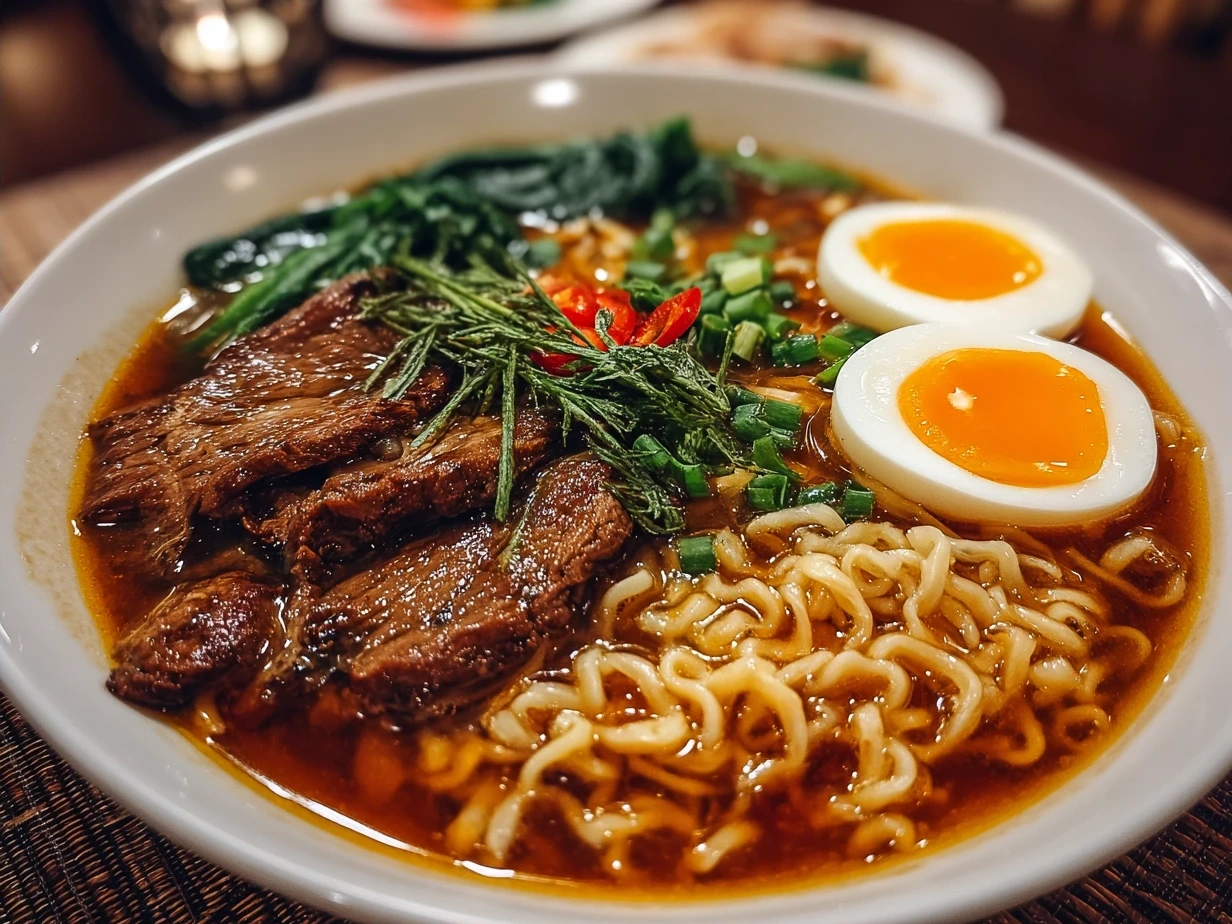
I remember the first time I truly connected with ramen noodle soup. It was a chilly evening, rain tapping gently against frosted windowpanes, the kind of weather that draws you toward warm, comforting food. A friend invited me over for dinner, and I watched as she carefully ladled rich ramen soup broth over steaming bowls filled with instant ramen noodles. The kitchen filled with the smoky aroma of charred pork and the faint hint of ginger and garlic, something in those authentic ramen ingredients spoke of quiet tradition and care. The light flickered from a single candle, casting soft shadows over the table as we slurped the noodles without making a fuss about manners. That night, ramen noodle soup revealed itself not merely as fast food but as a ritual—a moment of sharing, warmth, and simple joy. It was more than a meal; it was a connection.
Ramen noodle soup has roots woven deeply through Japanese food culture, where seemingly humble ingredients come together in complex harmony. From that kitchen moment forward, I wanted to learn how to make ramen that narrates its story—from the broth to the noodles, from the toppings to the final slurp. For those curious about this, you can find a quick homemade ramen recipe at Pinch of Yum that echoes this accessibility without sacrificing soul. This food story extends beyond instant ramen noodles; it’s about discovering the layers beneath the surface, the way authentic ramen ingredients translate into comfort and care. Let’s move into the heart of what this ramen noodle soup requires, the essential components that build its character.
The Components
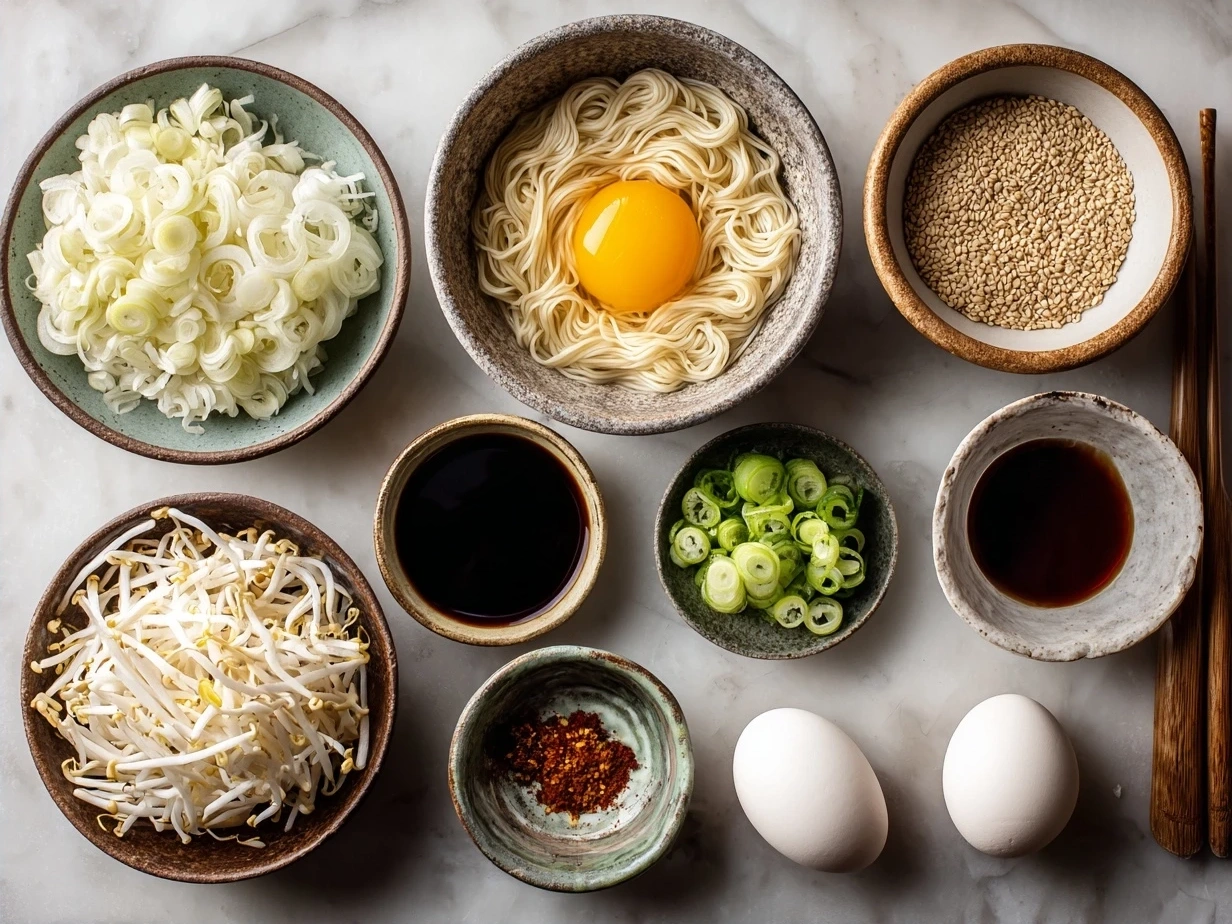
The beauty of this ramen noodle soup lies in ingredient quality and thoughtful selection. Here’s a list that forms the base of this nourishing bowl:
- 4 cups chicken broth or pork broth (preferably homemade or high-quality store-bought for depth)
- 2 packs instant ramen noodles (fresh, if you can source from Asian markets)
- 1 tablespoon soy sauce (look for naturally brewed)
- 1 teaspoon miso paste (adds a subtle umami layer)
- 2 cloves garlic, thinly sliced
- 1-inch piece of fresh ginger, sliced
- Soft-boiled eggs, halved (I love how the creamy yolk enhances every bite)
- Sliced green onions (find fresh, crisp stalks at the farmers market)
- Nori sheets (optional but brings the sea air to your bowl)
- Chashu pork or grilled chicken slices (use leftovers or homemade; this ramen noodle soup adapts well here)
- Bean sprouts or bamboo shoots for texture
Look for broth with a rich, clear quality—this will carry the dish. Note that authentic ramen ingredients like miso paste and nori can often be found at specialty stores or well-stocked markets. I prefer using fresh ginger and garlic sautéed briefly in the pot before adding broth; it gives a fragrant base that fast-track recipes sometimes skip. This ramen noodle soup benefits from seasonal greens or sprouts, adding a fresh snap even in winter. The interplay of textures and umami-rich components transforms the simple instant ramen noodles into something worth savoring.
The Process
Making ramen noodle soup demands patience and attention, but not in a daunting way. Here are detailed steps to guide your kitchen moment:
- Prepare the broth by warming chicken or pork broth in a pot over medium heat. Add sliced garlic and ginger to infuse the soup with a gentle, spicy aroma. Watch as the broth begins to simmer lightly; the smell signals it’s on the right track.
- Add soy sauce and miso paste to the simmering broth, stirring until fully dissolved. This step deepens umami and balances savory with a touch of sweetness, essential for a harmonious ramen noodle soup.
- Cook the noodles separately in boiling water according to package instructions, usually 2-3 minutes. Drain quickly to avoid overcooking—instant ramen noodles have their own timing rhythm. While noodles cook, notice the broth’s surface glistening and tiny droplets of fat, a sign of richness.
- Prepare toppings in parallel: boil eggs to the perfect soft yolk, slice green onions, and grill or warm the protein you choose—chashu pork is a classic but grilled chicken also lends a smoky note.
- Assemble the bowl: nestle noodles deep in a wide bowl, ladle hot ramen soup broth over them, and arrange toppings artfully. The layering mirrors Japanese ramen recipes’ attention to detail—from protein placement to green onions scattered like confetti.
- Final seasoning and warmth. I often add a small dash of toasted sesame oil to complete the aroma and taste just before serving.
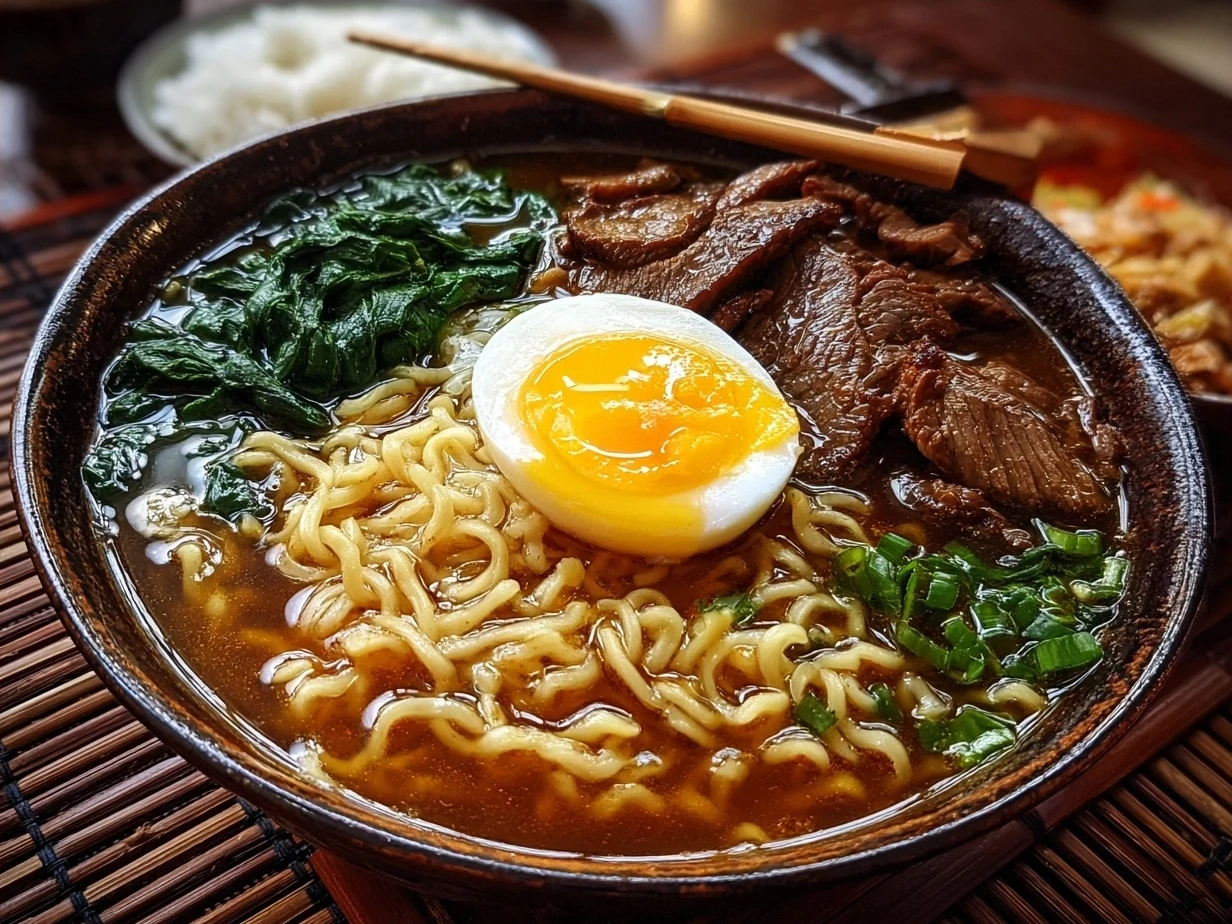
This ramen noodle soup requires mindfulness in each step. Understanding broth behavior—how miso dissolves fully without clumping, why noodles should remain separate until served—shapes the dish’s success. For those new to this ritual, Fifteen Spatulas offers a quick ramen noodle soup technique that maintains these essentials with time in mind.
Bringing It to the Table
Serving ramen noodle soup transforms a meal into an experience. Its adaptability means it fits various occasions—from quiet nights craving comfort to welcoming guests around a shared table.
Pair this ramen noodle soup with simple pickled vegetables or a light seaweed salad to complement the broth’s richness. Consider adding a side of crunchy tempura—its crisp texture contrasts the soft noodles beautifully. Presentation matters in Japanese ramen recipes: a wide, shallow bowl allows the aromas to waft invitingly with each spoonful.
Seasonal variations spark new life into the dish. Spring’s tender peas and ramps, sliced thin, can brighten the ramen noodle soup with fresh, green notes. Winter invites richer broths and heartier toppings like braised pork belly. My friends have often responded to this ramen noodle soup with surprise: how these familiar instant ramen noodles can hold their own when paired with thoughtful ingredients and care.
For those looking for a quick yet satisfying version, Fork Knife Swoon provides a simple homemade chicken ramen recipe that fits easy weekday evenings without losing the narrative of good broth and purposeful toppings.
Common Questions
Ramen noodle soup curiosity brings many practical questions. Here’s what I’ve gathered from my own kitchen moments and readers’ inquiries:
What sets this ramen noodle soup apart from instant noodles out of the package?
This version embraces depth of ramen soup broth, layering authentic ramen ingredients rather than relying on flavor packets. The broth, slow-infused with aromatics, carries the soul here.
Is it possible to make ramen noodle soup ahead?
Yes, broth can be prepared days before and stored. Cook noodles fresh right before serving to prevent sogginess. Some find making the broth in batches helps maintain flavor integrity over time.
How do I know when the ramen noodle soup broth is done?
You’ll notice a balance of aroma and taste—no single flavor should overpower. The broth develops a mild savory richness, and a pleasant warmth on the palate signals readiness.
Can I substitute instant ramen noodles with fresh or homemade ones?
Definitely. Fresh noodles from Asian markets provide superior texture and absorb the broth differently. While this food narrative began with instant ramen noodles, authentic Japanese ramen recipes often rely on fresh noodles for that springy bite.
What authentic ramen ingredients are most crucial?
Soy sauce, miso paste, fresh aromatics like ginger and garlic, and protein such as chashu pork or chicken form the backbone. Adding nori or vegetables rounds the flavor and texture profile.
Are there vegetarian options for ramen noodle soup?
Absolutely. Use vegetable broth with mushrooms and tofu for protein. Miso is a great base for vegetarian ramen soup broth variants.
How can I adjust spice levels in ramen noodle soup?
Incorporate chili oil, fresh chili slices, or a dash of shichimi togarashi. Control the heat to suit your preferences without overwhelming the broth’s delicate flavors.
These questions mirror those frequently posed by newcomers and seasoned eaters alike. For comprehensive approaches, Fifteen Spatulas offers quick ramen noodle soup recipes that address various needs. This links to broader themes about respecting tradition while adapting to contemporary kitchens.
Closing Thoughts
This ramen noodle soup is worth your time because it invites patience and awakens your senses. Broth quality dictates the overall experience, turning familiar instant ramen noodles into a nourishing feast. Balance of flavors—savory, sweet, umami—defines its character, reminding us that simple ingredients carry complex stories. The layering of textures, from silky eggs to crisp greens, creates a playful contrast that keeps the bowl interesting until the final slurp.
For tried variations, try a rich tonkotsu-inspired ramen noodle soup with pork bone broth, a light shoyu style focusing on soy sauce, or a vegetarian miso ramen filled with garden-fresh vegetables. Each approach alters the outcome, offering new insights on how to make ramen meaningful.
I encourage you to make this ramen noodle soup your own. Experiment with broths, seasonings, and toppings that reflect your kitchen’s rhythm and the stories you want to tell around the table. In my cooking, this dish holds a special place as a comfort and a challenge—a ritual bridging the gap between fast food familiarity and slow tradition.
To dive deeper into mastering this food narrative, consider the quick homemade ramen recipes from Pinch of Yum, Fifteen Spatulas’ quick ramen noodle soup options, or Fork Knife Swoon’s simple chicken approach. These kitchen resources connect you to the broader community of food storytellers who find meaning in every bowl of ramen noodle soup.
Welcome back anytime to this shared table, where every serving carries a story worth savoring.
Ramen Noodle Soup
This comforting Ramen Noodle Soup features a rich, savory broth with tender noodles and flavorful toppings, perfect for a quick and satisfying meal.
- Prep Time: 10 minutes
- Cook Time: 15 minutes
- Total Time: 25 minutes
- Yield: 2 servings
- Category: Dinner
- Method: Skillet
- Cuisine: Asian
Ingredients
- 4 cups chicken broth
- 2 cups water
- 2 packs instant ramen noodles (discard seasoning)
- 1 tablespoon soy sauce
- 1 teaspoon sesame oil
- 2 cloves garlic, minced
- 1 teaspoon fresh ginger, grated
- 1 cup sliced mushrooms
- 1 cup baby spinach
- 2 soft-boiled eggs, halved
- 2 green onions, sliced
- 1 tablespoon miso paste (optional)
- Salt and pepper to taste
Instructions
- In a large pot, heat sesame oil over medium heat. Add minced garlic and grated ginger, sauté until fragrant.
- Pour in chicken broth and water, bring to a gentle boil.
- Add soy sauce and miso paste (if using), stir to dissolve.
- Add sliced mushrooms and simmer for 5 minutes.
- Add ramen noodles and cook according to package instructions, typically 3-4 minutes, until tender.
- During the last minute of cooking, add baby spinach and cook until wilted.
- Divide soup and noodles into bowls. Top each bowl with soft-boiled egg halves and sliced green onions.
- Season with salt and pepper as needed, serve hot.
Notes
For extra protein, add cooked chicken or tofu. Customize toppings like corn, seaweed, or chili flakes to enhance flavor.