
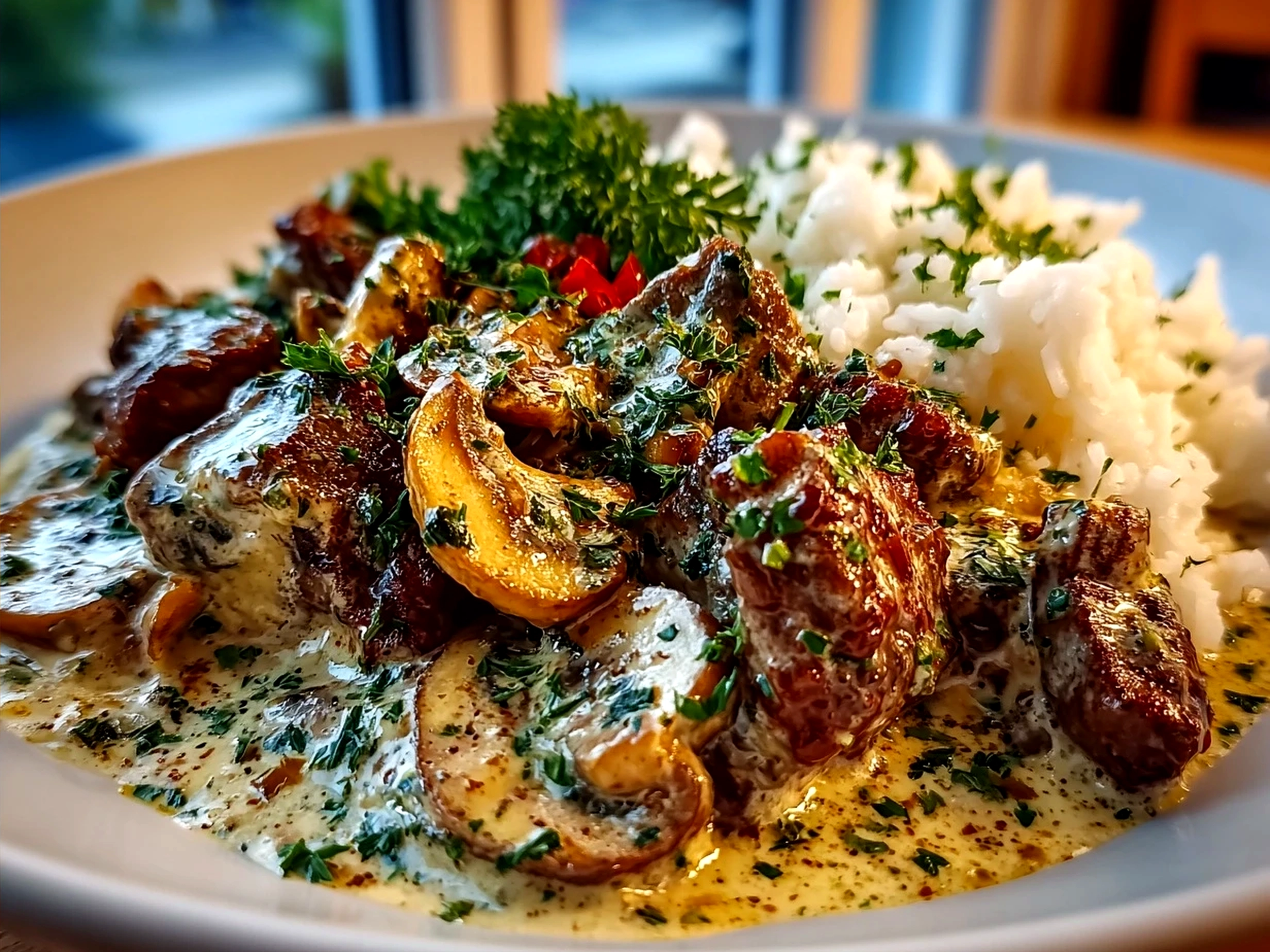
There’s a distinct moment in my kitchen when the sizzle of tender beef hits the pan, mingling with the earthy scent of mushrooms and the sharp tang of mustard. That moment first landed firmly in my memory the day I tackled Gordon Ramsay Beef Stroganoff. It wasn’t just a dish; it was a kitchen lesson that reshaped how I approach comfort food. The recipe had been shared in a small cooking group, where someone swore by Gordon Ramsay cooking techniques for transforming classic dishes. The promise of a rich, creamy beef stroganoff sauce, paired with the simple elegance of Russian beef stroganoff, felt like something worth learning.
The light in the kitchen was soft that day, early autumn sun filtering through the window, casting a warm glow on my ingredients as they awaited their turn. The beef, cut into strips, looked inviting against the glossy mushrooms and the fresh parsley stacked patiently on the counter. This Gordon Ramsay Beef Stroganoff wasn’t some over-complicated foreign dish; it was a grounded, soulful meal rooted in tradition but elevated through thoughtful technique.
What struck me most was how this recipe revealed the patience and care behind a dish, something that felt absent in rushed weekday dinners. Each step in Gordon Ramsay cooking asked for mindfulness, from searing the beef properly to coaxing out the perfect silky texture in the sauce. It taught me that food stories often live in these moments—the waiting, the watching, the gentle stirring of a Dutch oven.
I gather the ingredients again now, ready to repeat the process, and invite you to join in discovering this Gordon Ramsay Beef Stroganoff together. Not just to follow steps but to understand why this dish resonates—how beef stroganoff recipe and technique can make a classical Russian beef stroganoff into a memorable experience.
The Components
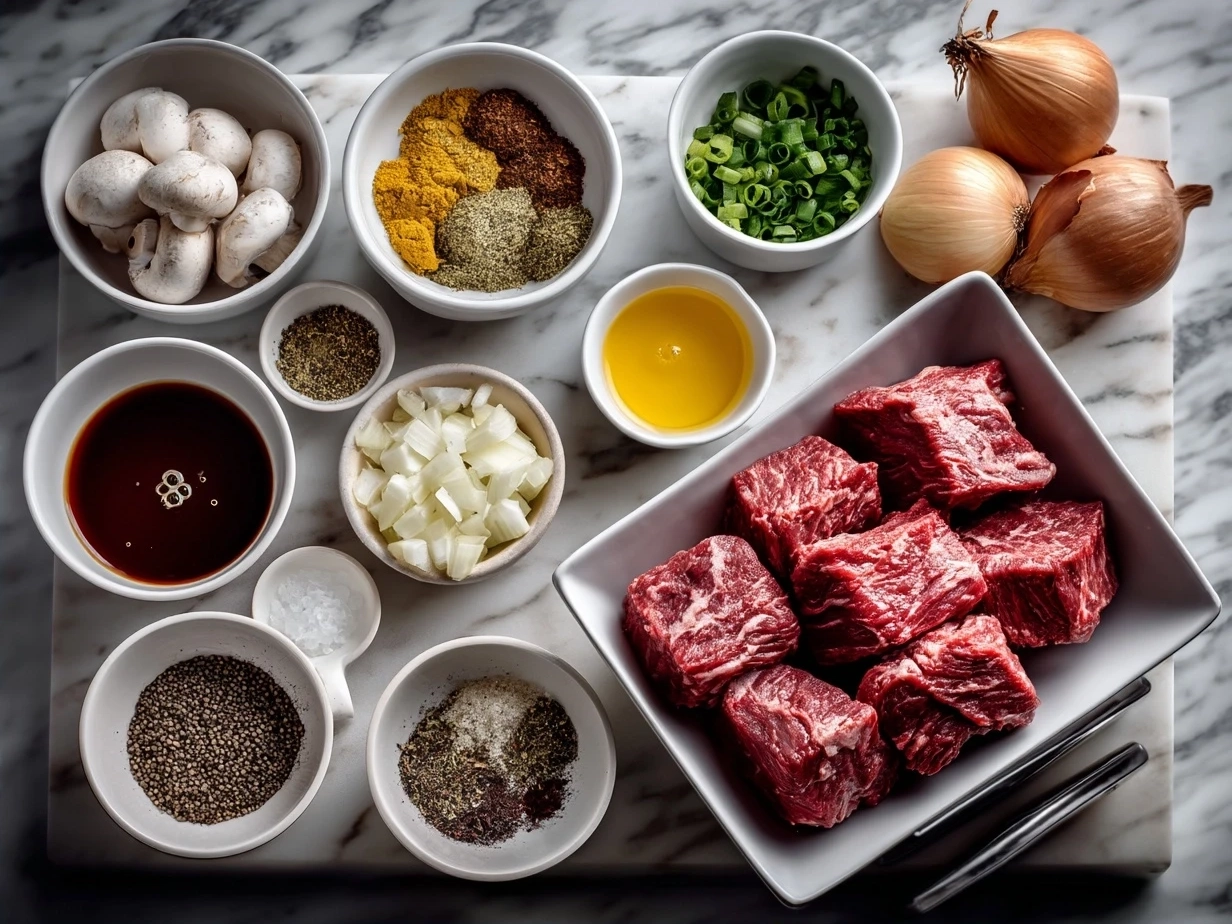
The beauty of this Gordon Ramsay Beef Stroganoff lies in ingredient quality and precise balance. Here’s what transforms good Gordon Ramsay Beef Stroganoff into memorable food:
- 300 grams (about 10 oz) sirloin steak or ribeye, thinly sliced – Look for beef with a fine grain and a bit of marbling; this guarantees tenderness and flavor.
- 200 grams (7 oz) cremini or button mushrooms, thinly sliced – Fresh, firm mushrooms give the sauce its earthy depth. Farmers markets often have the best selection.
- 1 small onion, finely chopped – Choose a sweet onion variety for subtle sweetness.
- 2 cloves garlic, minced – Fresh garlic adds brightness and balances the richness.
- 1 tablespoon Dijon mustard – This is a cornerstone for the creamy beef stroganoff sauce, offering a gentle vinegar note.
- 150 ml (about ⅔ cup) sour cream or crème fraîche – I prefer crème fraîche for a slight tang balanced with creaminess.
- 150 ml beef stock – Opt for homemade or low-sodium stock to control seasoning.
- 2 tablespoons olive oil or clarified butter – Finds its way mostly for sautéing, keeping the beef juicy.
- Fresh parsley, chopped – Adds a fresh herbal bridge at the end.
- Salt and freshly ground black pepper – Adjusted carefully to enhance flavors.
- Optional: Splash of brandy or white wine – Introduces a delicate acidity, found in some Gordon Ramsay Beef Stroganoff variations.
This Gordon Ramsay Beef Stroganoff adapts well to what’s available. If mushrooms are at their seasonal peak, you can swap for wild mushrooms for even more depth. While the beef choice often feels like the star, the supporting ingredients in this beef stroganoff recipe matter equally.
If you find yourself short on steak cuts, a ground beef version is another path worth visiting—see how that flavor plays out in this ground beef stroganoff. Paying attention to freshness and seasonality here makes the dish sing with full flavor, making the technique all the more worthwhile.
The Process
1. Heat your pan over medium-high and add olive oil or clarified butter. The first step in creating this Gordon Ramsay Beef Stroganoff demands patience. When the fat shimmers, it signals readiness for the beef. Sear the thinly sliced sirloin in batches, avoiding overcrowding, so you get a caramelized crust. This initial step locks in juices and shapes flavor.
2. Remove the beef strips and set aside. The transformation from raw to golden brown should be evident—your Gordon Ramsay Beef Stroganoff hinges on this beautifully developed beef.
3. In the same pan, lower heat to medium. Add chopped onion and garlic, stirring gently until soft but not browned. Your kitchen fills with the subtle sweetness of softened onions—this is the aromatic base that supports Russian beef stroganoff’s heart.
4. Toss in the sliced mushrooms. Cook until they release moisture and start to brown. Watch carefully as their color deepens; the difference between watery and richly caramelized mushrooms defines the creamy beef stroganoff sauce’s depth.
5. If using, deglaze the pan now with a splash of brandy or white wine. Let it reduce slightly, catching all those tasty browned bits. This step breathes complexity into the sauce—one reason Gordon Ramsay cooking feels so intentional.
6. Stir in Dijon mustard, blending well through the mushroom mixture. The tang here plays into the beef stroganoff sauce’s signature brightness and balance.
7. Pour in beef stock slowly, allowing it to simmer gently and reduce slightly. Your Gordon Ramsay Beef Stroganoff will start thickening, its flavors mingling in this cozy pot.
8. Return beef strips to the pan, coating with the sauce as everything melds together. Lower heat to keep beef tender; it should not overcook.
9. Remove pan from heat and stir in sour cream or crème fraîche. The transition from hot to warm keeps the dairy smooth, preventing curdling. This creaminess is a signature trait of a creamy beef stroganoff.
10. Season with salt and freshly ground black pepper to taste. Finish with chopped parsley for freshness that cuts through richness.
Throughout the process, it’s worth noting how the aromas shift. The earthiness deepens after the mushrooms meet the heat, the richness becomes tangible in the cream, and the beef stays fragrant, never dry. My repeated kitchen moments cooking this Gordon Ramsay Beef Stroganoff always reveal a new detail—a slightly different timing for the mushrooms or an adjusted beef thickness depending on mood.
While this recipe honors the Russian beef stroganoff roots, these subtle moments in cooking turn it into something distinctly approachable and satisfying. For alternative takes on beef preparation techniques that complement this dish’s flavor profile, you might enjoy checking out garlic butter beef bites with creamy mashed potatoes.
Bringing It to the Table
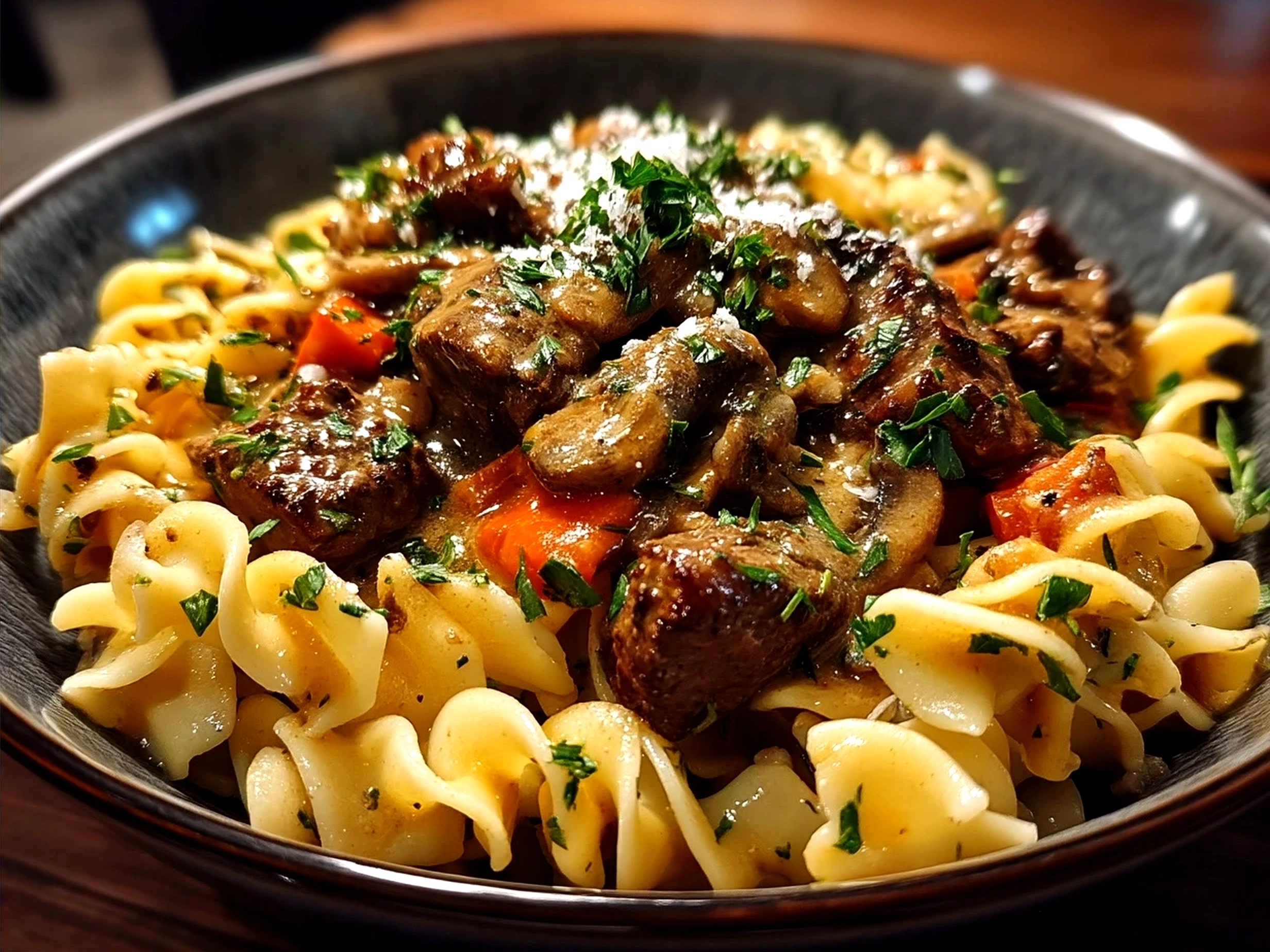
This Gordon Ramsay Beef Stroganoff fits beautifully into various kitchen moments. It’s warm enough for a cozy winter meal yet light enough to welcome into a spring dinner when mushrooms return fresh from foraging trips.
The creamy beef stroganoff sauce pairs excellently with buttered egg noodles—a traditional staple—or over mashed potatoes for a homey touch. I keep fresh parsley or even chopped tarragon nearby when serving; their herbal brightness contrasts the sauce’s richness deliciously.
Consider this dish for weekend family dinners, where the slower process feels worth the effort. It also shines in small gatherings, where sharing stories over plates of tender beef stroganoff invites conversation. The presentation is simple but thoughtful—serve straight from the pan or transfer to a warm dish sprinkled with herbs.
For a slightly different rhythm, try serving Gordon Ramsay Beef Stroganoff alongside steamed rice or roasted root vegetables. As seasons vary, swapping out fresh local mushrooms or adding a hint of smoked paprika in the sauce introduces variety without losing its essential character.
Friends who have tasted this Gordon Ramsay Beef Stroganoff often comment on how it feels both familiar and refined—a food story that honors tradition but updates it with gentle technique. If you want to play with bolder contrasts, the crispy, sweet notes in something like a crispy Peking beef bowl offer a surprising yet delightful balance.
Common Questions
What makes this Gordon Ramsay Beef Stroganoff different from similar dishes?
Gordon Ramsay Beef Stroganoff stands out through its attention to simplicity and timing. The cooking method keeps beef tender without stewing it too long, preserving a fresh, meaty quality. The thoughtful layering of flavors — from mushroom caramelization to the precise addition of Dijon mustard — gives the beef stroganoff sauce a balanced richness often missing from quicker recipes. For a glimpse at Gordon Ramsay’s own approach, see this Gordon Ramsay’s beef stroganoff recipe.
Can I prepare this Gordon Ramsay Beef Stroganoff in advance?
It’s best enjoyed freshly made because the creamy beef stroganoff sauce is at its peak right after cooking. That said, you can prepare the ingredients and even cook the beef and mushroom mixture ahead, holding them separately chilled for a day. Gently reheat and stir in sour cream just before serving to preserve the silky texture. For tips on reheating and adapting leftovers, explore this guide on how to make Gordon Ramsay’s Stroganoff at home.
How do I know when my Gordon Ramsay Beef Stroganoff is properly done?
The beef should be browned on the outside but still tender and pink inside, preventing dryness. The mushrooms must be deeply caramelized but not burnt, just right to enrich the sauce. The beef stroganoff sauce thickens slightly but remains saucy, not gluey. Texture and aroma guide you—the rich, savory scent with a hint of tang signals readiness.
What can I substitute for sour cream in the beef stroganoff sauce?
Crème fraîche works beautifully, adding a milder tang and thicker texture. Greek yogurt offers a healthier option but add it off the heat to avoid curdling. Some cooks combine cream with a touch of lemon juice for a similar effect. I’ve found classic beef stroganoff in creamy mushroom sauce excellent for experimenting with dairy variations.
Is this dish traditionally Russian?
Yes, beef stroganoff originates from 19th-century Russia, known as a creamy beef and mushroom dish often served over noodles or rice. Gordon Ramsay Beef Stroganoff respects this heritage while incorporating his cooking style, emphasizing simplicity and enhanced flavor.
Can I use ground beef instead of steak?
Absolutely. A ground beef stroganoff recipe requires less time but offers a different texture. Though it lacks the chew and bite of steak strips, it makes a practical weeknight meal. Check out this ground beef stroganoff to see how it maps onto the same flavor landscape.
Should I add alcohol to my Gordon Ramsay Beef Stroganoff?
While optional, a splash of brandy or white wine brightens the sauce, cutting through its richness. It’s a subtle detail that deepens flavor with acidity. If you prefer to skip alcohol, use a touch of vinegar or lemon juice for similar effect.
How do I store leftovers?
Cool quickly and transfer to an airtight container. Store in the fridge for up to two days and reheat gently on low to keep the sauce smooth. Freeze only if necessary, but note the texture may slightly change upon thawing.
Closing Thoughts
This Gordon Ramsay Beef Stroganoff is worth your effort because it creates a balance between tradition and thoughtful technique, invites attention to ingredient quality, and transforms an everyday meal into a comforting ritual. Each time I return to this dish, I appreciate how the process pulls me deeper into the food narrative—how the simple act of cooking opens a window to shared history and personal memory.
For variety, try these tested Gordon Ramsay Beef Stroganoff variations:
- Swap sour cream for crème fraîche for a smoother sauce.
- Use wild mushrooms in season for earthier flavor.
- Incorporate a splash of brandy or white wine to brighten the sauce.
Different approaches influence the dish’s texture and flavor, offering room for personalization while keeping the core comforting spirit intact.
I encourage you to make this Gordon Ramsay Beef Stroganoff your own. The journey of cooking it, watching the beef sear, the sauce thicken, the smells rise—that’s where food stories come alive. This dish holds a place where memory meets technique, perfect for moments when you seek comfort and connection in a bowl.
Ready to try? The blend of careful Gordon Ramsay cooking and timeless beef stroganoff recipe is waiting to become part of your kitchen moments.
For more inspiration, you can also find other beef and creamy dishes connected to this style like the ground beef stroganoff, garlic butter beef bites with creamy mashed potatoes, and crispy Peking beef bowl. Each tells a different food narrative worth savoring.
Gordon Ramsay Beef Stroganoff

Gordon Ramsay’s Beef Stroganoff is a rich and creamy Russian-inspired dish featuring tender strips of beef cooked with mushrooms and onions in a savory sour cream sauce, perfect for a comforting dinner.
- Prep Time: 15 minutes
- Cook Time: 20 minutes
- Total Time: 35 minutes
- Yield: 4 servings
- Category: Dinner
- Method: Skillet
- Cuisine: Russian
Ingredients
- 500g beef sirloin, thinly sliced
- 1 onion, finely chopped
- 2 cloves garlic, minced
- 250g mushrooms, sliced
- 2 tbsp olive oil
- 1 tbsp butter
- 1 tbsp Dijon mustard
- 150ml beef stock
- 125ml sour cream
- 1 tsp smoked paprika
- Salt and freshly ground black pepper, to taste
- Fresh parsley, chopped for garnish
- Cooked egg noodles or rice, for serving
Instructions
- Heat olive oil and butter in a large skillet over medium-high heat.
- Add the sliced beef and sear quickly until browned on all sides but still rare inside. Remove beef and set aside.
- In the same skillet, sauté the onions and garlic until softened and fragrant.
- Add the mushrooms and cook until they release their moisture and begin to brown.
- Stir in the Dijon mustard and smoked paprika, cooking for another minute.
- Pour in the beef stock and bring to a simmer, reducing slightly.
- Lower the heat and stir in the sour cream, combining well without boiling.
- Return the beef to the skillet, season with salt and pepper, and gently heat through for 2-3 minutes.
- Garnish with fresh parsley and serve immediately over cooked egg noodles or rice.
Notes
For an extra touch of richness, add a splash of brandy when sautéing the mushrooms and flames it off before adding the stock.