
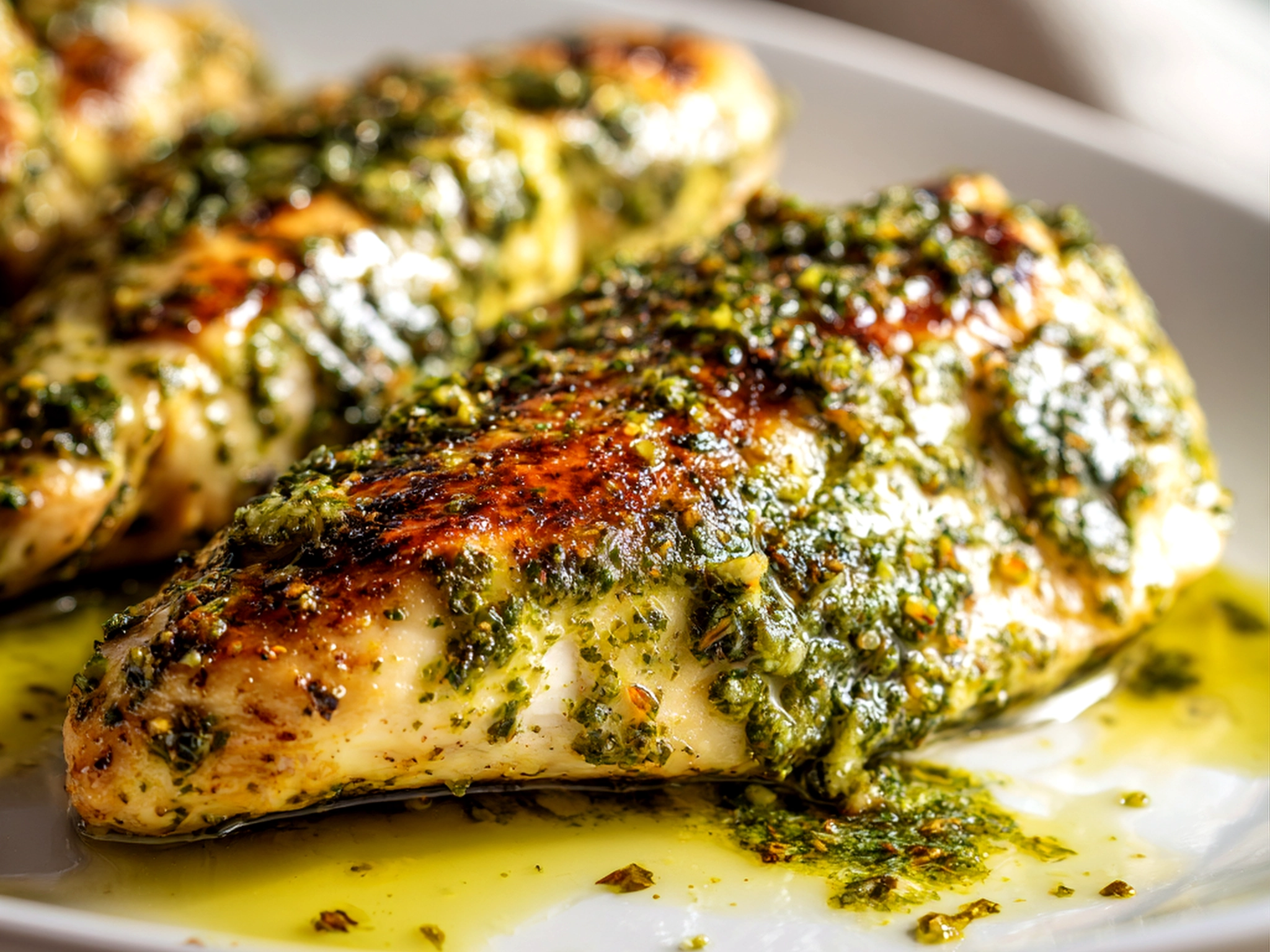
The first time pesto chicken entered my life, it was during a slow summer evening in a neighbor’s kitchen bathed in golden light. I remember the faint clinking of glass jars on the shelf, the fresh sharp scent of basil swirling in the humid air, and the bright green smear of sauce artfully spread over plump chicken breasts. It wasn’t just a meal, but a passage to a simpler way of eating—where fresh herbs, careful hands, and unhurried time promised something more than just nourishment.
My friend Elena shared that pesto chicken with me, and her explanation made me realize how food holds histories. She spoke of basil pesto chicken as a reflection of Mediterranean life, where communal gardens and thoughtfully picked ingredients define the rhythm of cooking. This dish became a symbol of seasons slipping quietly by and the importance of food that belongs to place and moment.
The pesto chicken wasn’t just something to taste; it felt like an invitation—to linger, to notice, and to honor a lineage of flavors that feel both vibrant and timeless. Since that evening, pesto chicken has returned to my table many times in varying guises, each occasion deepening my appreciation for what simple ingredients can achieve when handled with respect.
I invite you to sit down with pesto chicken, to trace the outline of its story through your own kitchen moments. Together, we’ll explore the elements that make pesto chicken memorable and the ways it continues to connect us across tables and seasons.
The Components
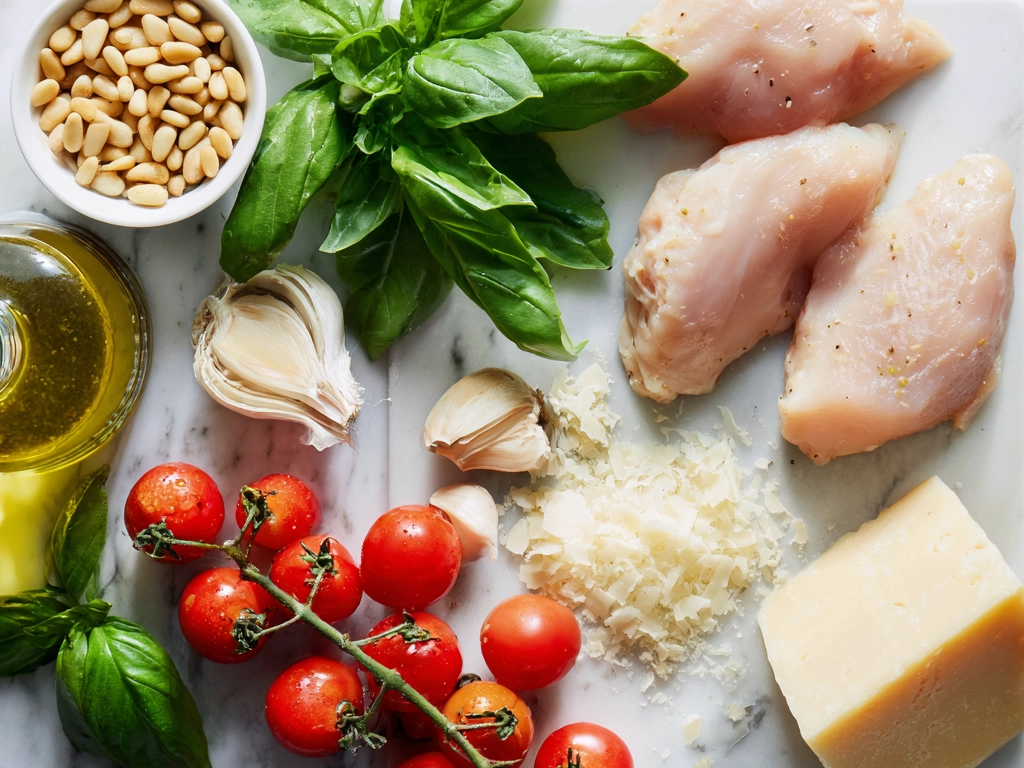
The beauty of pesto chicken lies in ingredient quality and balance. To honor this dish, here’s what you’ll need:
- Bold fresh basil leaves, about 2 cups packed. Look for bright green leaves without spots found at farmers markets or well-stocked grocery stores.
- 1/2 cup high-quality extra virgin olive oil. This oil carries much of the flavor spirit of basil pesto chicken.
- 1/3 cup pine nuts, toasted lightly to soften their bite without overpowering.
- 2 cloves garlic, freshly crushed for that sharp pungency unique to pesto chicken.
- 1/2 cup finely grated Parmesan cheese. Opt for Parmigiano-Reggiano when possible.
- Sea salt and freshly ground black pepper for seasoning.
- 4 boneless, skinless chicken breasts, the perfect canvas for pesto chicken.
- Optional: 1/4 cup cream to create a creamy pesto chicken variation that adds richness without sacrificing brightness.
Here’s what transforms good pesto chicken into memorable food—the interplay of freshness, texture, and seasoning. The basil should feel almost fragrant enough to lift you out of the kitchen. The chicken must be firm but tender. I prefer using chicken that’s free-range, knowing it will hold juices better under the pesto’s rich coat.
This pesto chicken adapts well to what’s available. In a pinch, substituting walnuts for pine nuts or using a sharp pecorino cheese changes the flavor subtly but deliciously. If basil is out of season, try a blend of basil and parsley to maintain that green vibrance without losing the herbaceous backbone.
Each component invites a particular attention to freshness and sourcing—key in preserving the spirit of pesto chicken. The transformation starts in selecting ingredients worth your time.
The Process
Making pesto chicken requires intention and respect for each stage.
- Begin by preparing the basil pesto. Combine basil leaves, toasted pine nuts, garlic, and Parmesan in a food processor. Slowly drizzle in olive oil while pulsing until you achieve a sauce with texture but spreadable consistency. This basil pesto chicken sauce will carry the flavor through every bite.
- Season the chicken breasts with salt and pepper on both sides. This step ensures that as your pesto chicken cooks, the foundational taste remains balanced.
- Spread a generous layer of basil pesto over each chicken breast, coating thoroughly but not so thick as to overpower.
- For oven baked pesto chicken, preheat your oven to 375°F. Place the pesto-covered chicken in a baking dish. You might drizzle a bit more olive oil or dot with a few extra pine nuts for texture.
- Bake for 20-25 minutes, or until the chicken reaches an internal temperature of 165°F. Your pesto chicken will signal readiness through a firm texture and fragrant aroma, the pesto caramelizing slightly on the surface.
- For a creamy pesto chicken twist, after baking, you can add a splash of cream to the pan and return it to the oven for 5 more minutes. This thickens the sauce just enough to glide across rice or pasta.
Repeated attempts have taught me that this step demands patience. Cooking the chicken fully without drying it out is a dance between temperature and time. The pesto acts as both a seal and a flavor infusion—it’s worth trusting that quiet heat will coax the juices through evenly.
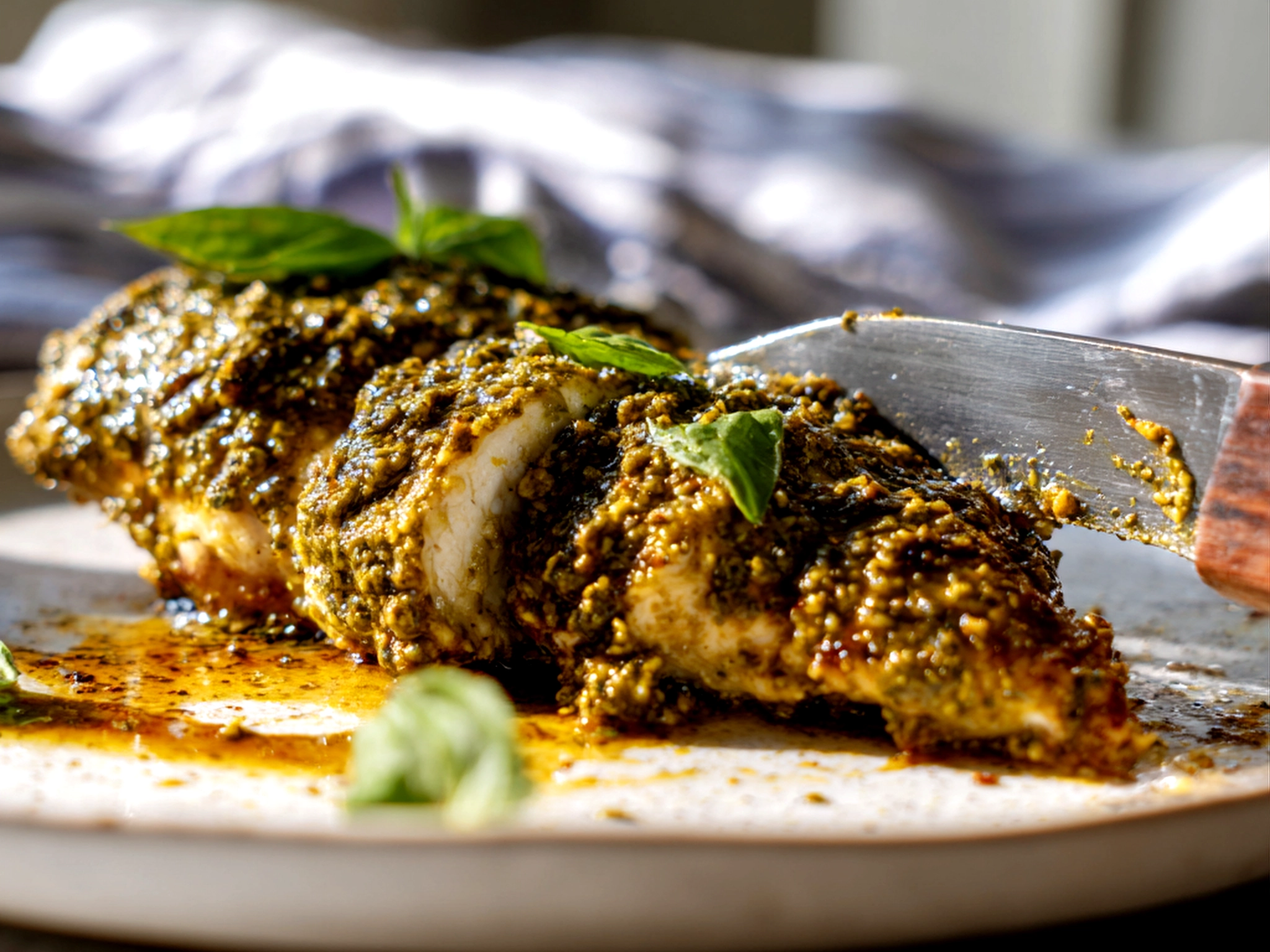
Your pesto chicken’s transformation—from bland chicken to herbaceous, layered meal—is a tribute to layering flavors rather than rushing textures. Watching those green flecks turn golden and the aroma deepen marks a kitchen moment worth savoring.
Bringing It to the Table
Pesto chicken adapts beautifully to many settings. It can be a quick weekday comfort or a centerpiece for a casual dinner with friends.
Consider pairing pesto chicken with basil-inspired sides, like a fresh tomato salad or a crisp green bean sauté tossed with lemon zest. For richer textures, chicken pesto pasta featuring al dente noodles offers a comforting embrace, as seen in classic pesto chicken pasta dishes found on sites like Bad Batch Baking’s creamy pesto chicken pasta bake or Budget Bytes’ one pot creamy pesto chicken pasta recipe.
Pesto chicken also shines at family gatherings—it’s approachable but feels special. Oven baked pesto chicken keeps well and can be reheated without losing its charm, making it practical for ahead-of-time preparations, similar to the convenience highlighted in Dishing Out Health’s pesto chicken pasta bake.
Presentation matters less than the feeling around the plate. Still, I find a bright sprinkle of fresh basil leaves or a wedge of lemon lifts the dish visually and in flavor.
Seasonally, pesto chicken fits summer best, when basil is at its peak. In cooler months, swapping basil for kale or spinach pesto offers a vibrant, if less traditional, alternative.
Those who have tasted my pesto chicken often comment on its freshness and heartiness—a testament to how this dish bridges simplicity with sophistication. This connection between flavor and moment is what brings pesto chicken fully to the table.
Common Questions
What makes pesto chicken different from similar dishes?
Pesto chicken’s core lies in the fresh basil pesto that coats and flavors the meat. Unlike dishes with heavier sauces, pesto chicken leans on herbaceous brightness rather than cream or tomato bases. The balance of garlic, pine nuts, and cheese in the pesto sets it apart.
Can I prepare pesto chicken in advance?
Absolutely. You can assemble the chicken with pesto coating a few hours ahead or even the night before. Just cover tightly and refrigerate. For oven baked pesto chicken, bring the chicken to room temperature before baking for even cooking.
How do I know when my pesto chicken is properly done?
The best indicator is using a meat thermometer aiming for 165°F internal temperature. The chicken should feel firm but springy to touch, and the pesto edges slightly caramelized.
What substitutes work for pine nuts?
Walnuts or almonds offer a similar texture and mild nutty flavor. Toast lightly to awaken their oils before blending into pesto.
Is creamy pesto chicken quite different?
Adding cream transforms pesto chicken into a richer dish, often paired with pasta. It softens the pungency of basil, offering a luscious sauce that clings to noodles.
Can I make chicken pesto pasta with leftover pesto chicken?
Yes, slicing leftover pesto chicken into pasta works well—try recipes like the one-pot creamy pesto chicken pasta at Budget Bytes for inspiration.
What should I serve alongside pesto chicken for a balanced meal?
Vegetables with a bit of acidity or sweetness complement pesto chicken well—think roasted cherry tomatoes, grilled asparagus, or a simple lemon salad.
Closing Thoughts
Pesto chicken is worth your attention for three reasons. First, its reliance on fresh, meaningful ingredients that respect season and place brings an honesty to your plate. Second, the technique of layering flavor through pesto rather than masking chicken’s natural taste invites a more thoughtful approach to cooking. Third, pesto chicken’s versatility across meals and occasions makes it a welcoming staple in any food storyteller’s repertoire.
I’ve tried baked pesto chicken, creamy pesto chicken blends, and even pesto stuffed chicken variations—you’ll find a range that allows you to lean into different textures and flavor depths. Each approach shifts the dish subtly, showing how pesto chicken can be both familiar and surprising.
For more inspiration, check out pesto stuffed chicken recipes here or melt-in-your-mouth chicken here. A bright chicken salad twist appears here.
I encourage you to treat pesto chicken as a foundation, a story waiting for your hands and heat to bring it into your home. No matter your kitchen methods or ingredient choices, this pesto chicken has a way of making quiet moments memorable around your table.
Ingredients Image
pesto chicken
Pesto chicken is a flavorful Italian-inspired dish featuring tender chicken breasts coated in vibrant basil pesto, perfect for a quick and healthy dinner.
- Prep Time: 10 minutes
- Cook Time: 25 minutes
- Total Time: 35 minutes
- Yield: 4 servings
- Category: Dinner
- Method: Baked
- Cuisine: Italian
Ingredients
- 4 boneless, skinless chicken breasts
- 1/2 cup basil pesto
- 2 tablespoons olive oil
- Salt and pepper, to taste
- 1/4 cup grated Parmesan cheese
- Fresh basil leaves, for garnish
Instructions
- Preheat the oven to 375°F (190°C).
- Season the chicken breasts with salt and pepper on both sides.
- Heat olive oil in a skillet over medium-high heat.
- Sear the chicken breasts for 2-3 minutes on each side until golden brown.
- Place the seared chicken in a baking dish and spread pesto evenly over each piece.
- Sprinkle Parmesan cheese on top of the pesto-coated chicken.
- Bake in the oven for 20-25 minutes, or until the chicken is cooked through and juices run clear.
- Garnish with fresh basil leaves before serving.
Notes
Serve pesto chicken over pasta, quinoa, or a fresh green salad for a complete meal. For extra flavor, add sun-dried tomatoes or pine nuts as a topping.